
Beef Liver Pâté
Growing up in 1990s’ culturally-evolving Singapore, my gastronomical world was just beginning to expand.
With a new flood of immigrants and expats settling in our young nation, the food scene was changing rapidly. Instead of having just Singaporean local dishes (which were usually a mix of Chinese, Indian, Malay and Eurasian foods), Singaporeans were suddenly exposed to a wide variety of cuisines, including Japanese, Korean, German, Italian, and American dishes.
Up till my teenage years, my taste buds had been accustomed to and had always taken comfort in Chinese food.
My great grandparents had immigrated to Singapore from Fujian Province and Hainan Province in China, and my Chinese ancestry took pride in their famous dishes, such as Hainanese chicken rice and Hokkien noodles, along with a variety of other common Chinese dishes. My food palate had been sitting safely in its comfort zone, until this outburst of new foreign cuisines invaded Singapore.
The two people responsible for my sudden exposure to foods from other cultures were my Uncle Eric and Aunty Adeline.
Aunty Adeline, my father’s sister, and her husband Uncle Eric, were widely travelled, and had a natural gift for sourcing out great restaurants. They were pioneer “foodies” – if such a word even existed then.
Most people eat to live, but Aunty Adeline and Uncle Eric live to eat. And while they love local food, what makes them different is that they are constantly sourcing out new diners to eat at, asking for tips on the latest food hunt, never conforming to just the same old dishes.
The extent of their love for food, particularly Uncle Eric’s, was best epitomized during our trip to Tokyo, where he made us spend two whole hours scouring for a good ramen store, despite us being hungry and freezing in the chilling winter cold.
Going out to dinner or lunch with Uncle Eric and Aunty Adeline was always an adventure.
We were inevitably in for some sort of a surprise – never really knowing what cuisine or restaurant they would dare us to try. They were the ones who introduced us to Japanese foods, such as Yakitori, Sushi, and Sashimi. They took us to Angus Steakhouse to try beef steaks – an expensive rarity in my teenage years. And then along the way, we explored Western foods like Italian pasta, American burgers, and British fish and chips – with some turtle soup and pig organs soup in between.
Still not impressed?
On our family travels the experiences were even more exciting.
Just how exciting, you ask? Be prepared.
We’ve tried beef armpits and raw octopus in Japan. Pork rib soup in Malaysia. Sea urchin and geoduck in Hong Kong. There was always something newer and more exotic to try. (I’m starting to feel like we’re starring on an episode of Bizzare Foods with Andrew Zimmerman!)
So it probably doesn’t surprise you that my first experience with liver pâté was also with them.
I can’t remember exactly when and where we tried it, but I remember Uncle Eric telling us that this liver pâté was delicious, mashed liver (somehow I was skeptical and couldn’t imagine how mashed livers could be remotely delicious).
But Uncle Eric’s recommendations have mostly been good, if not spectacular.
So I spread this mashed liver paste on a piece of bread and ate it bravely – and floated to heaven. I remember it was full of flavor, tasty without tasting like how I imagined liver to be.
And it was expensive, too.
From then on, I had the idea that pâté was for the more refined palates and deeper pockets, a dish that was not easily attainable because of its high price tag.
But then..I realized how wrong I was, when I googled a pâté recipe online.
I found it incredulous that a dish whose ingredients were cheap and was easy to make was sold for expensive prices in fine restaurants.
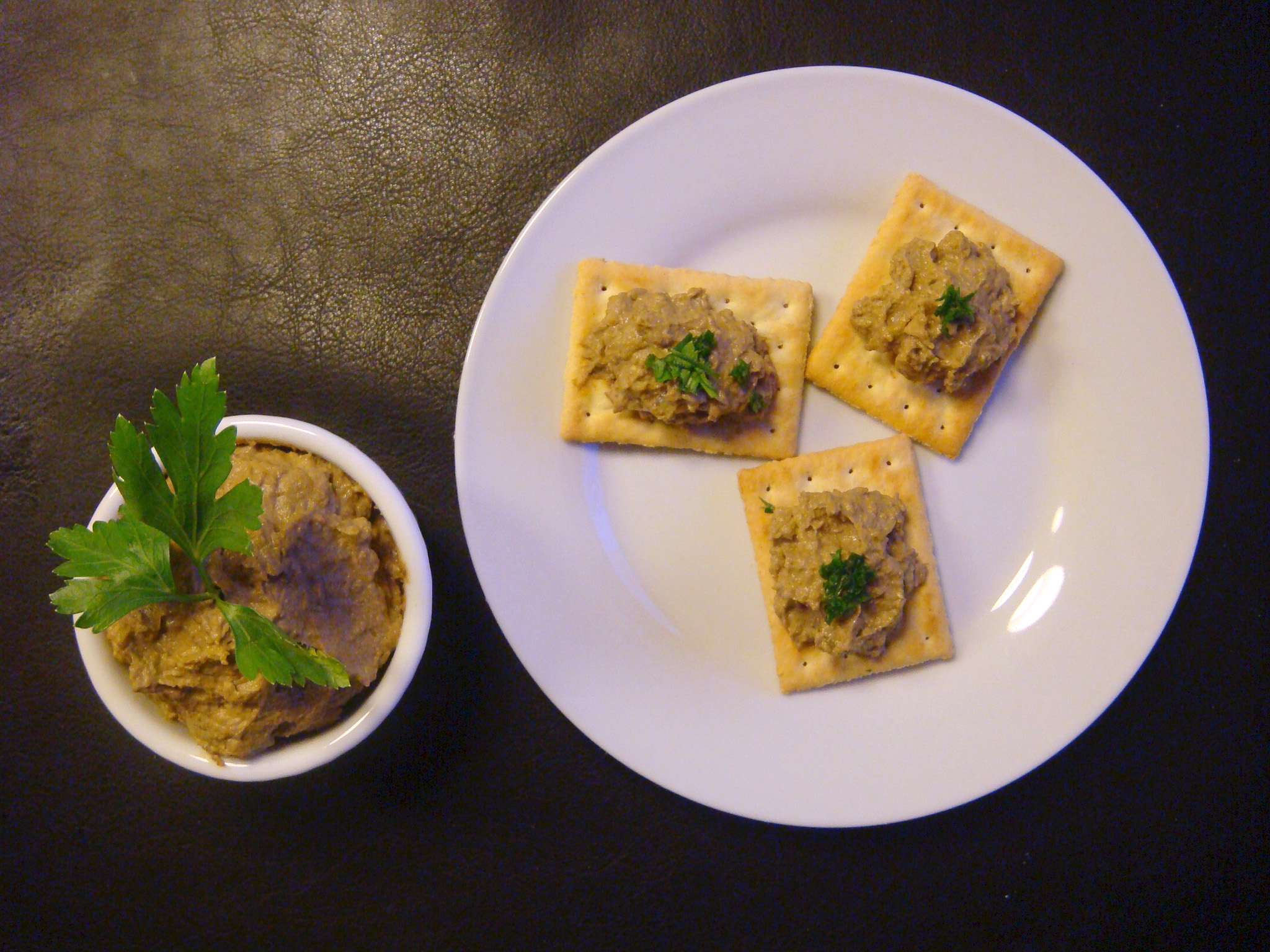
According to Wikipedia, pâté is essentially a mixture of cooked ground meat and fat minced into a spreadable paste. The more popularly known recipes include either beef, chicken or goose liver. Common additions also include vegetables, herbs, spices, and either wine or cognac, armagnac or brandy. Pâté can be served either hot or cold, but it is considered to develop its fullest flavor after a few days of chilling.
Ingredients are common, easily found, and not expensive at all!
Want to save this recipe?
Enter your email & I'll send it to your inbox. Plus, get great new recipes from me every week!
I’m still bewildered. And if you thought the same as me, that pâté was only for special occasions and when you can afford it, I’m so glad to tell you that you’re wrong.
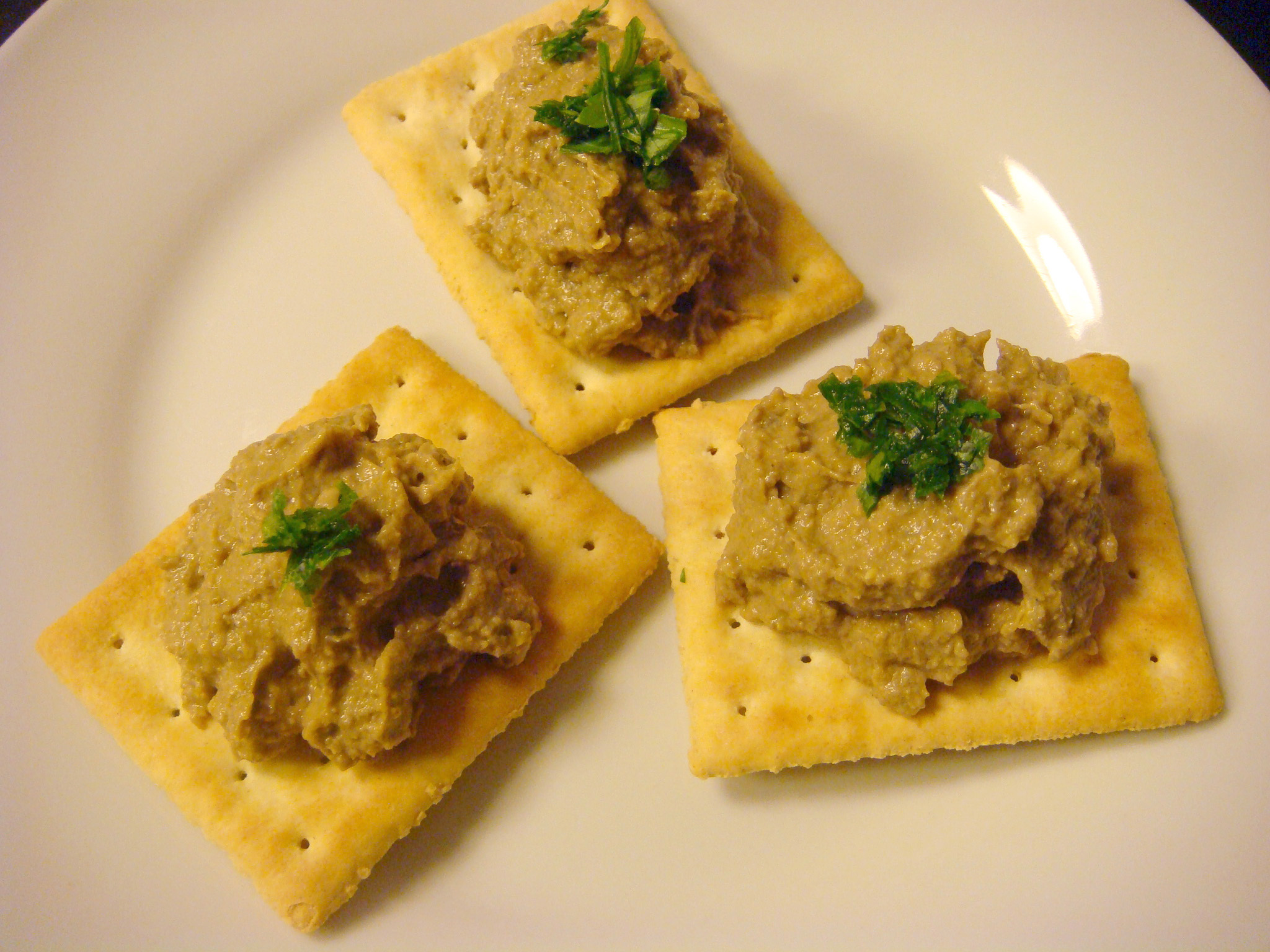
Here’s how you can make them too.
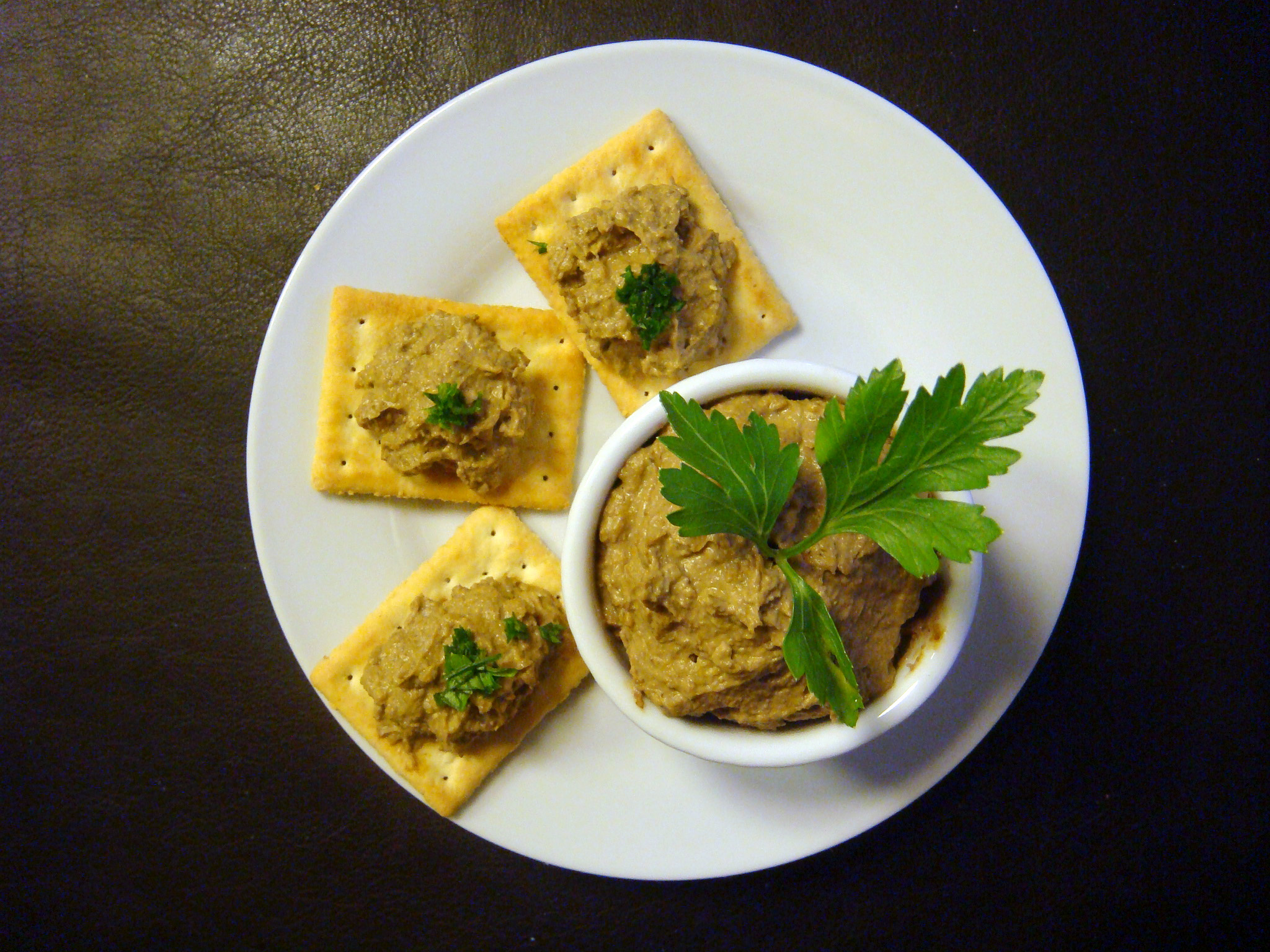
BEEF LIVER PATE (Serves 10)
Inspired by Angela Griffin’s Chicken Liver Pâté recipe on BBC Food
Ingredients:
1) 200g of butter
2) 2 medium onions, chopped
3) 2 cloves of garlic, roughly chopped
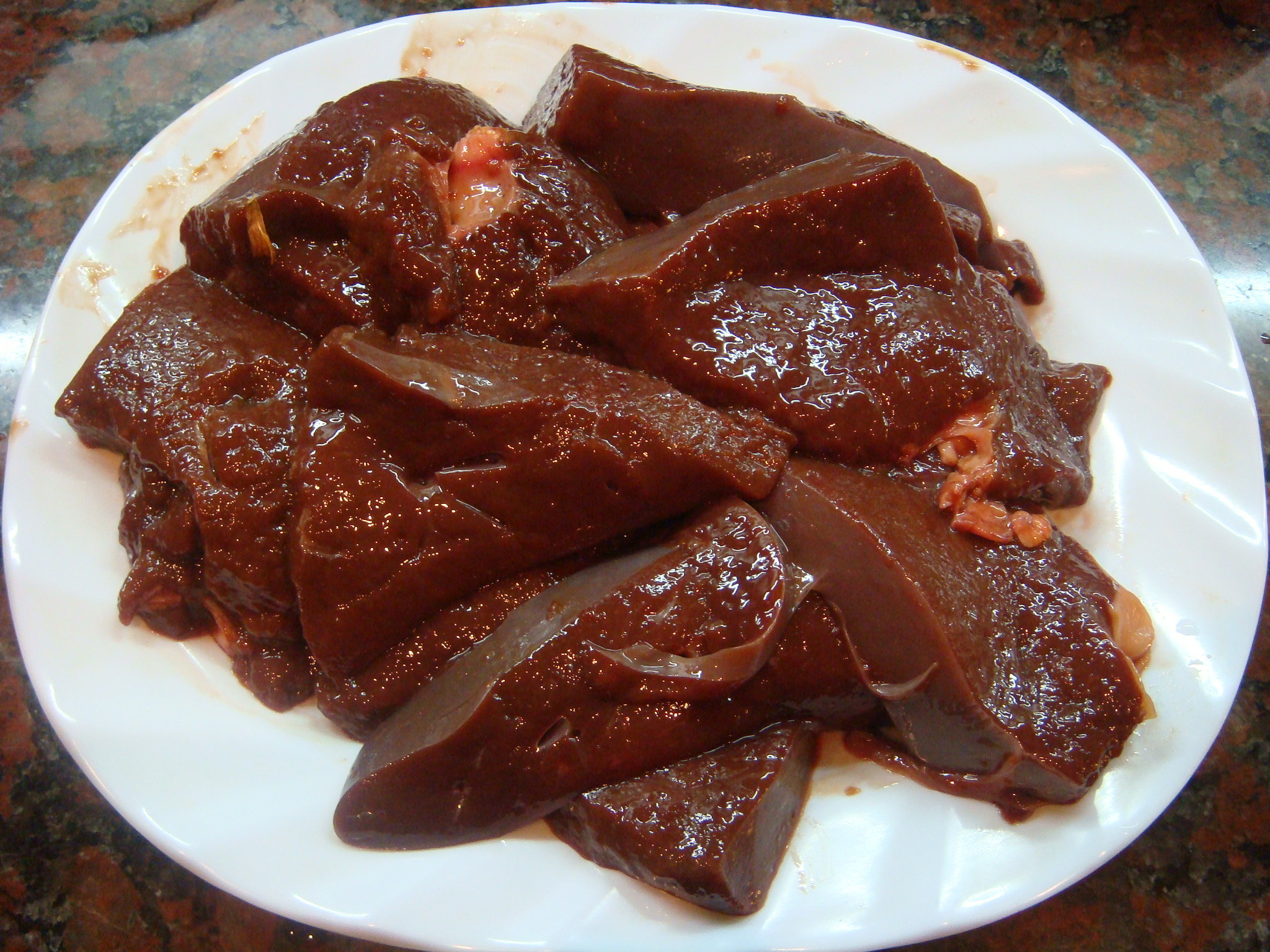
4) 750g of beef livers, cut into small pieces (you can replace beef livers with chicken or goose livers)
5) 1 tablespoon of white wine (make sure its dry white wine, not sweet or dessert wine)
6) 1 teaspoon of mustard powder
7) Salt & freshly ground black pepper to taste
8) Parsley to garnish (optional)
Steps:
1) Chop onions and garlic
2) Cut beef livers into small cube-sized pieces
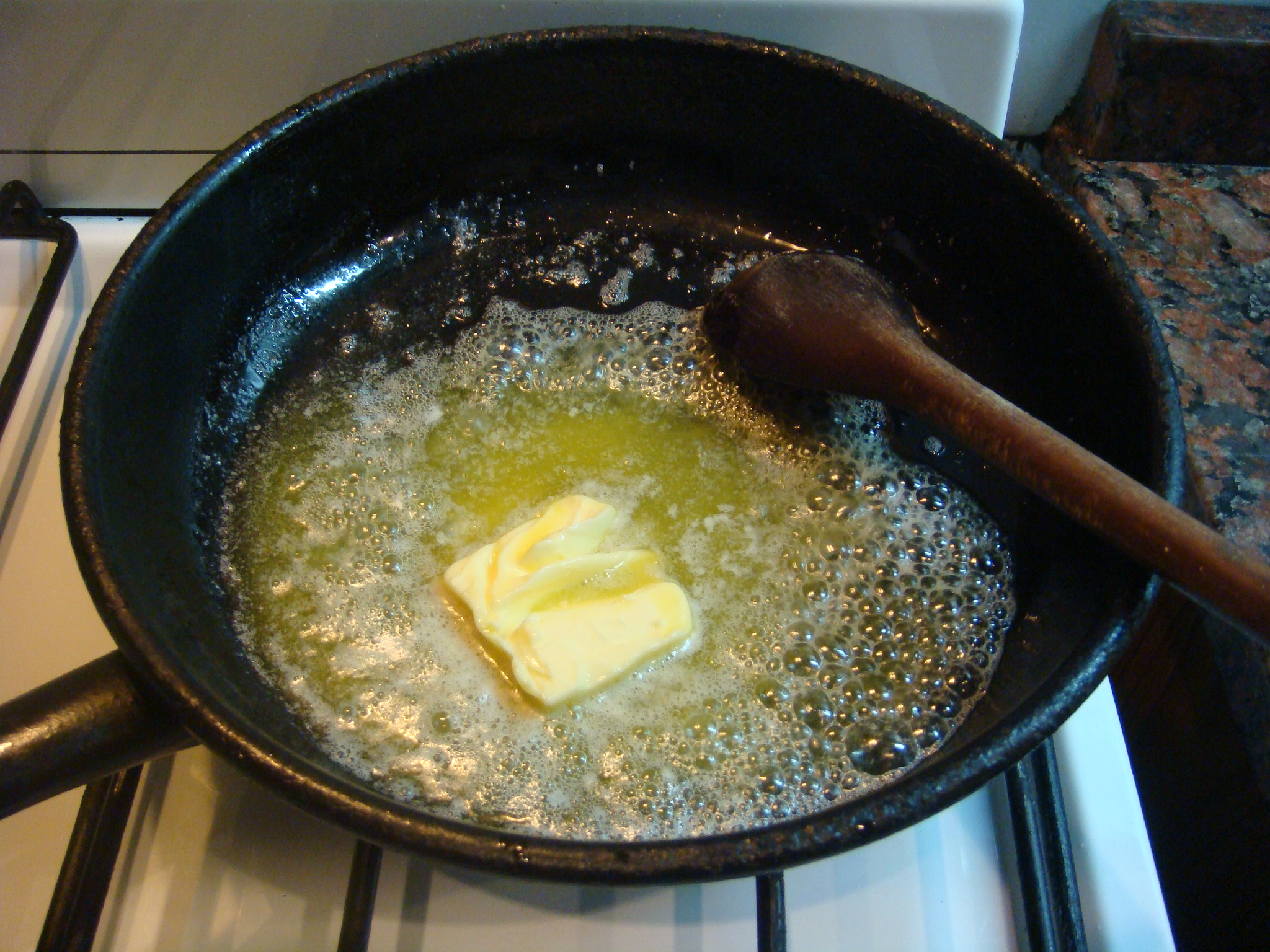
3) Melt 100g of butter in a pan over medium heat
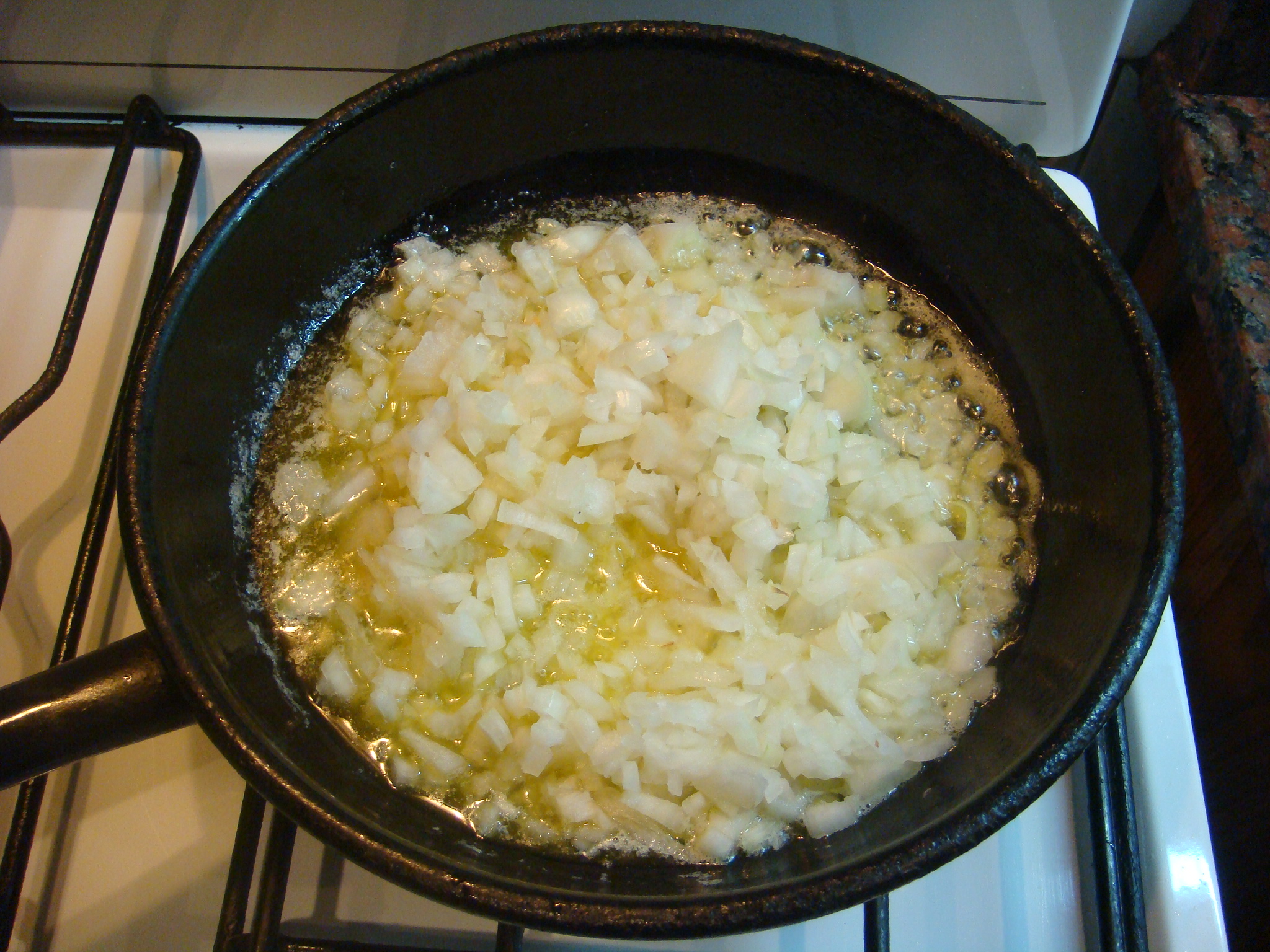
4) Saute chopped onions until softened but are still white in colour
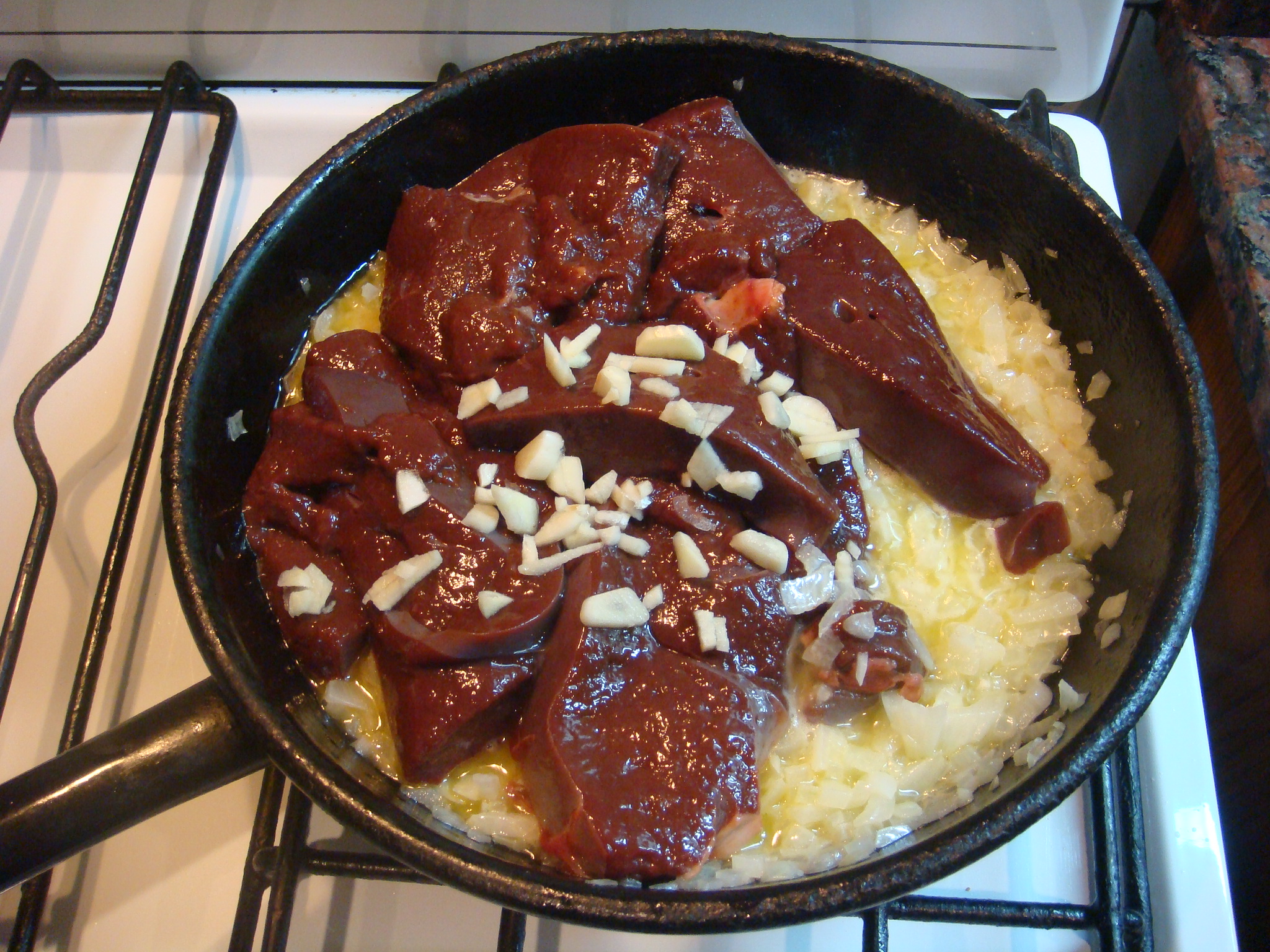
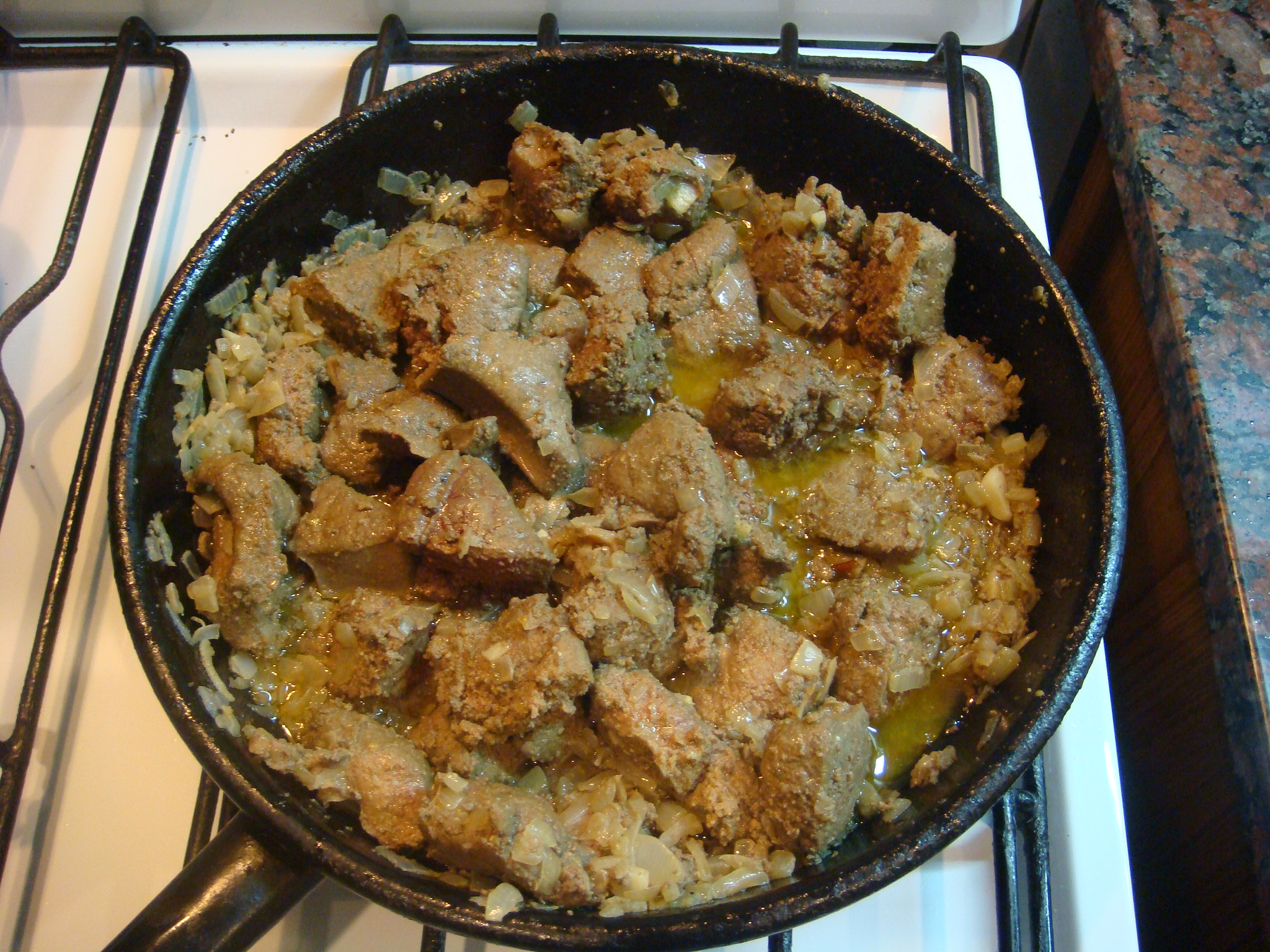
5) Add garlic and chopped livers, frying livers until browned all over and cooked throughout
6) Add in white wine and mustard powder, and salt & pepper
7) Process liver mixture and 50g of remaining butter to get a smooth blended mixture
8) Add salt and pepper to taste
9) Transfer pâté into a serving ramekin or small bowl/dish
10) Chill in the fridge for a few hours (note that pâté generally tastes better after a few days)
11) Serve with crackers, garnishing with chopped parsley
Cut beef livers into small cube-sized pieces:
Melt 100g of butter in a pan over medium heat:
Saute chopped onions until softened but are still white in colour:
Add garlic and chopped livers, and fry livers:
Until browned all over and cooked throughout and add powder mustard and wine:
Process liver mixture and 50g of remaining butter to get a smooth blended mixture:

Serve with crackers and chopped parsley after pâté has been chilled:
Am trying to translate 750 grams beef liver into US measurements. The conversion site I found suggested 26 ounces. This would be approx 1 3/4 pound of liver. That seemed a lot. Can you comment?
We just had a quarter of a beef delivered and am excited about trying this recipe.
thank you
Also: have you thought about a search engine for recipes/ topics on your site????
Hey Anda, yes 1 3/4 pound of beef liver is about right.
Regarding the search engine function – if you go to the page “Recipes” – you can search by category and month! Plus, there is also a recipe image gallery for you to browse through! Hope that helps!
Hi Felicia
Really great recipe works well. I had a load of beef liver and did not know what to do with it all, but this was the ideal thing to do. I have made pate before with chicken livers but was not sure how beef liver would work, but its really very good.
Thanks for the great Idea.
Richard
UK
Hi Richard! I’m glad you liked how the beef liver turned out – thanks for taking the time to let me know how it went!
Here’s wishing you Happy Holidays and a happy 2014 from Buenos Aires!
Thanks for sharing. Just today I picked up my very first package of grassfed beef liver and had no idea what to do with it. This sounds perfect. I can’t have grains right now (hopefully one day), but think smeared over cucumber or with zucchini spears might be good.
Hi Kris! definitely! I’m sure the beef liver pate will also go well with zucchini spears! I really like this option! Hope it turns out well and if you do make it, let me know how it turned out! happy weekend!
I used 1/3 cup of Cognac instead of white wine and it turned out great. Thanks for sharing.
Hi Hanna! Never thought to use cognac to swap out the white wine but I’m glad it turned out well! So happy you liked it!
Perfect! This is just what I was looking for. Simple – straightforward – delicious! Best recipe for beef liver pate on the net!
Thanks for publishing and sharing.
Hi Tom, glad you found the recipe useful!
It must’ve been so exciting to go on all those foodie adventures with your brave and adventurous auntie and uncle ;). I like to watch Bizarre Foods bc it allows me to taste vicariously all the exotic foods, the ones that I’m too much of a coward to put in my mouth. So it’s no surprise that I’ve never tried pate…I did always associate it as being for fancy occasions..until now that is ;).
Hello min!
Yes, i had a fun and gastronomically-interesting childhood with my Aunty and Uncle! It was always a delight to go out and eat with them!
Bizarre Foods is always so extreme… I don’t actually think I would be able to eat most of the foods that Andrew Zimmerman put into his mouth! But during the few times that I watched it, I found it amazing that there were sooooo many weird, random things that people ate in this world!
Regarding pate….try it one day and you won’t regret it! (unless of cos you personally don’t like to eat animal organs and stuff like that 🙂
Have a great weekend dear! xoxo
Have a
Looks great! This is easier than other recipes I know,so congrats! And thank you….
Anna!
Thank you! I hope you get to try this recipe one day! It’s really pretty easy! Of course you can always change the type of liver (chicken, pork or goose liver instead of beef liver) .. and you can use brandy or cognac instead of white wine!
Really up to you to play around with the ingredients you have at hand! I actually wanted to use chicken liver but the Granja only had beef liver – and I didn’t have brandy or cognac so used white wine which was cheaper to get instead!
good luck with the recipe! You’ll like it! 🙂
Hi Felicia
Personally am allergic to lactose so I was thinking of preparing pâté for my guests,only……But , what about margarine , instad of butter ? Usually I don’t use it at all , but I ‘d like to hear from you….! You’re officially my Counsellor!
Thanks for all!
Hello Anna!
So glad you plan to use the recipe! Hmm, I suppose you could replace butter with margarine (I personally haven’t tried it with margarine so I don’t know if there will be a big difference in taste). But I suppose you could do that! Or maybe even use cooking oil!
Shouldn’t make a big difference i hope!
Let me know how it goes!! 🙂 Suerte!!!
Seguro! ….y gracias
…beef armpits?! You are a very brave eater Felicia. I think I just got gooebumps reading that heehee. But still, adventurous eating is fun, and it’s lovely to read how your aunt and uncle took you out of your comfort zone 🙂 Maybe one day I can step out of my comfort zone enough to try and eat pate.
Jess….!
I cannot believe you’ve never tried pate??? What about it deters you from doing so? That it’s liver? Think about it as a smooth, creamy brown paste that you can spread over breads and crackers, just like you would with Philadelphia cream cheese/ garlic spreads!
Btw, my Aunty read my post and then reminded me that I had also tried horse tongue when I was travelling with them (but honestly that has eluded my memory). Although it’s highly likely that I did – In Argentina as well, we eat cow’s tongue (as a cold dish served in vinegar and plenty of onions).
You have to eat pate one day! Promise me!!!
xoxo!!
Do you use salted or unsalted butter?
Hi Tarra, you can use either – but maybe if you prefer to control the amount of salt, you can cook with unsalted butter, and add salt accordingly once the pate is processed. Hope this helps, and enjoy your Pate!
Hi Felicia! Hope you had a great weekend! You are inspiring me to make my own pate, which you make it look a whole easier.
Hello Irene!
I had a nice weekend! Hope you and W did too!
Try making your own pate! it’s easy! 🙂 Plus not at all expensive!
Great post, thanks for sharing!
Glad you liked it! Thanks for reading! And if you do like liver pâté, this is really easy to make! Of course, you can always substitute it with other types of livers (i.e. chicken liver or goose liver).